
United Nations General Assembly
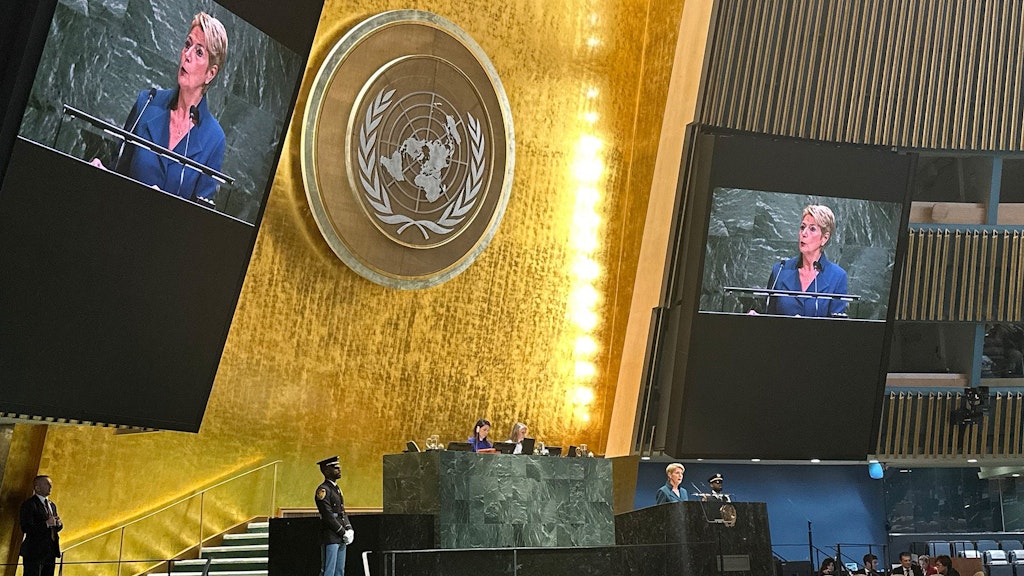
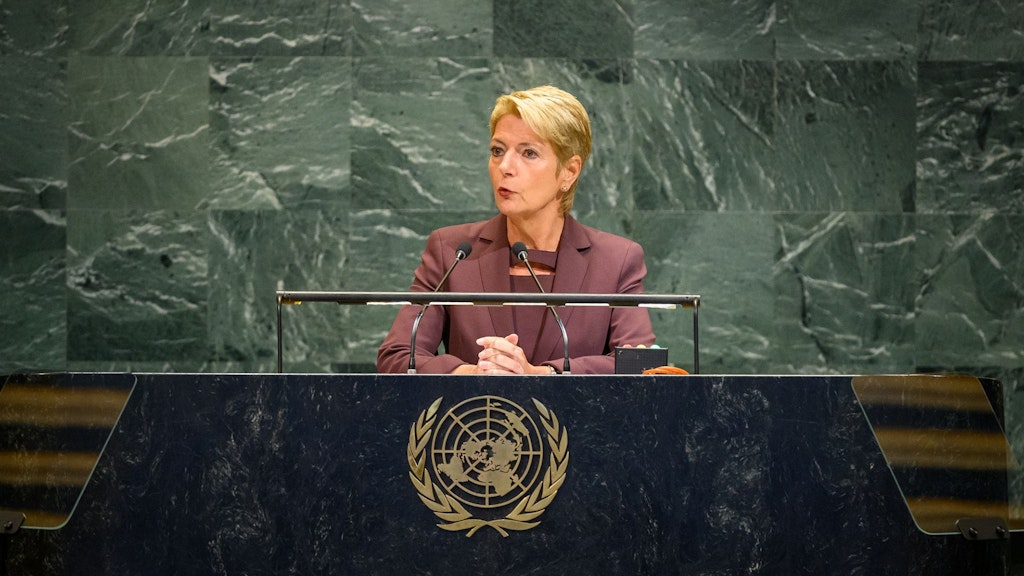
Speaking before the UN General Assembly, President of the Swiss Confederation Karin Keller-Sutter called for greater commitment to peace, the rule of law and multilateralism.
Video
Karin Keller-Sutter, President of the Swiss Confederation, addresses the general debate of the 80th Session of the General Assembly of the UN
Check against delivery
Madam President of the General Assembly
Secretary-General of the United Nations
Excellencies
Ladies and gentlemen
Eighty years ago, the world entered a new era, better times. On 27 January 1945, the concentration camp at Auschwitz was liberated. On 8 May 1945, the war in Europe ended.And on 25 June 1945, even before Japan's surrender, 50 states adopted the United Nations Charter in San Francisco.
These 50 states were, and I quote from the Charter, “determined to save succeeding generations from the scourge of war, which twice in our lifetime has brought untold sorrow to mankind”.
Upon the ruins of the Second World War, a new international order was born out of a shared conviction and determination to bring peace and prosperity to the world. The horrors of this time also gave rise to the Geneva Conventions of 1949, which serve to protect the victims of armed conflict.
During those years, the foundations were laid for decades of progress in democracy, the rule of law and the market economy. Foundations, which despite all the limitations and setbacks, also benefitted international cooperation, free trade, peace and international law.
I am not drawing any historical parallels, but it is safe to say that the 80th anniversary of the United Nations comes at a time when we are experiencing a new era of particularly extreme political and economic upheaval.
A time when there are once again too many wars with civilian populations experiencing unbearable suffering. A time in which a just, lasting peace in the Middle East and Ukraine still seems out of reach, and in which autocratic tendencies are gaining ground, including in Europe. A time in which free trade is being put to the test and when, ultimately, international law, including the United Nations Charter, risks being no more than empty words.
These upheavals did not come out of nowhere; they are the result of developments that in some cases go back a long way and which, in retrospect, we failed to take seriously enough for far too long. We must be honest: these are developments that have no simple solutions, either at the international or national level.
Nor is it enough to reiterate for the umpteenth time in speeches the merits of a particular form of government, the rule of law, international law, free trade and multilateralism. No, if we are serious about wanting to resolve these challenges, we must redouble our efforts.
For what are all the achievements of civilisation worth if they do not tangibly contribute to freedom, security and prosperity, if they do not bring people real benefits in their everyday lives?
There are two mistakes we must not make:
- firstly, pointing the finger only at others other states.
- secondly, leaving international organisations to work alone and acting as if they were completely detached from us.
Ladies and gentlemen
We should begin there where we can guarantee freedom and contribute to security and prosperity straight away. And that is generally at home, on our own doorstep. Don't get me wrong: this is not about praising national self-interest or condemning multilateralism!
On the contrary: Switzerland is convinced that multilateralism, international organisations and the United Nations are essential for the peaceful coexistence of peoples, for global economic prosperity, for resolving challenges such as migration, climate change and the digital transition, and, as Finance Minister, I would also add, for global financial stability.
Last year, we jointly adopted the Pact for the Future, underscoring our commitment to multilateralism. A central pillar of that pact is the 2030 Agenda for Sustainable Development. We must implement these roadmaps without delay.
Switzerland is also convinced that International Geneva can make a unique contribution to achieving these goals. As the UN's leading operational centre, Geneva has strong expertise in many areas that are crucial to our future, particularly those related to humanity and innovation. It is a unique ecosystem for reflection, discussion and joint action.
But a strong international organisation needs strong members. And when I say strong, I don't mean strength in terms of size or military might. I mean states that are able to offer their citizens an environment in which they are able to blossom – and I would also say express themselves – freely in complete safety and security. Security – not only in a military sense, but also legal, economic and social security. Security and freedom are essential prerequisites for economic growth and therefore prosperity.
They require institutions that are legally sound, reliable and capable of taking action. And they require political, social and financial stability. And here, each state must assume its own responsibilities. We cannot simply delegate our responsibilities to an international organisation.
Ladies and gentlemen
The international community benefits from the domestic strength, prosperity and stability of individual states. Only states that are strong domestically can show true solidarity and contribute to a successful international community. But we must also redouble our efforts as an international community.
Today, more than ever, the United Nations must take a critical look at itself: Is the organisation still able to fulfil its role as the 50 states intended when they adopted the Charter in San Francisco on 25 June 1945?
Multilateralism is also undergoing unprecedented upheaval. These upheavals are marked by a resurgence of violations of the normative framework and the very principles and values that underpin multilateral action: principles and values such as dialogue, cooperation, consensus-building, respect for international law and sovereign equality of states – regardless of size, economic strength or political influence.
Switzerland calls on all States to make a firm commitment to uphold the principles and values enshrined in the UN Charter 80 years ago. Only then will it be possible to reflect on reforms and efficiency measures that strengthen the impact of our actions in the three pillars of the organisation. With this in mind, we fully support the Secretary-General's ‘UN 80’ reform programme.
Our decisions must be guided by the goal of strengthening the effectiveness, coherence, agility and impact of multilateral action. It is vital that we take a structured and thoughtful approach to defining, together, the UN of tomorrow. Any reform must aim to strengthen the impact of the UN's work in the medium and long term.
I can assure you that Switzerland remains committed to the reform efforts, to a more efficient UN and to sustainable multilateralism, both as a reliable host state and as a committed member state.
Excellencies
Ladies and gentlemen
We are not in the same situation today as we were 80 years ago. We are, however, in the midst of a critical phase, and the next chapter of history has not yet been written. This also means that we can play an active role in shaping it.
In the words of another Auschwitz survivor, the Italian writer Primo Levi: “It happened, therefore it could happen again: this is the core of what we have to say.”
But it doesn't have to happen again. And indeed it must not happen again. That is why the United Nations was created 80 years ago. That is why we are here today. It is therefore up to us to ensure that this defining moment, which is so often talked about today, can mark the start of new era, just as it did 80 years ago.
Let us guard against arrogance and complacency and set to work, at home, in our respective countries, and together at the United Nations.
Press release
In New York President Karin Keller-Sutter emphasises the responsibility of states to ensure security and freedom
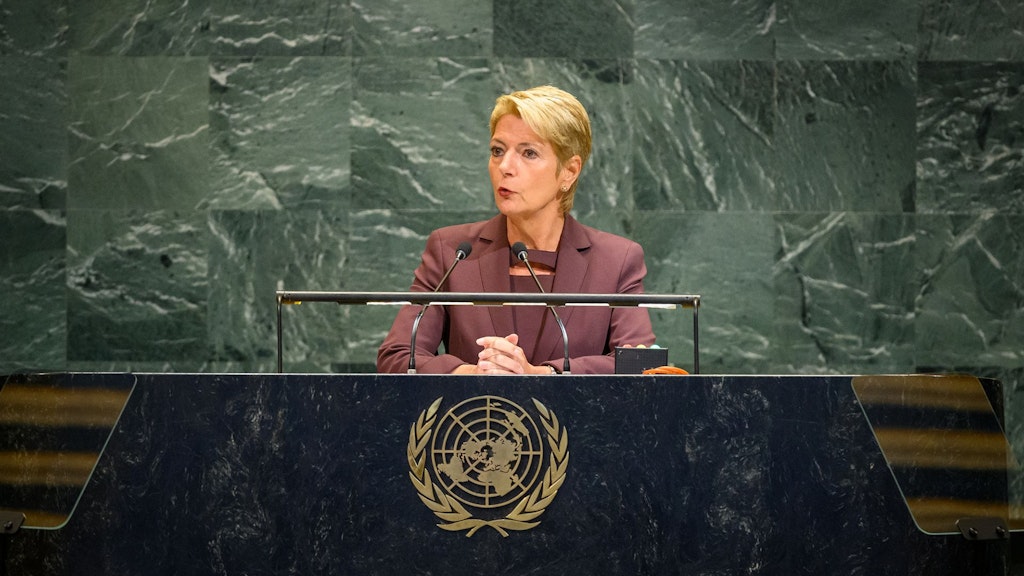
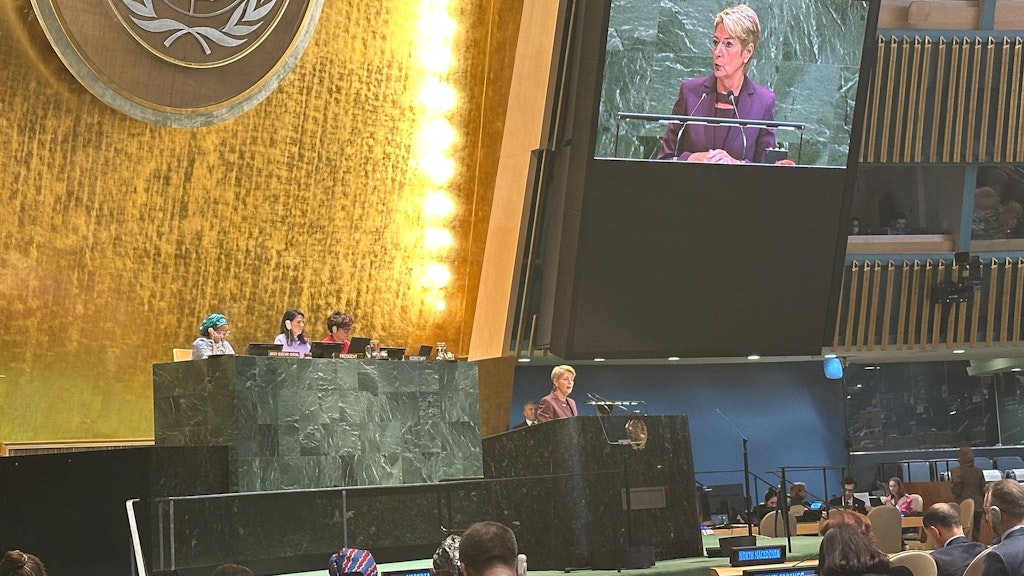
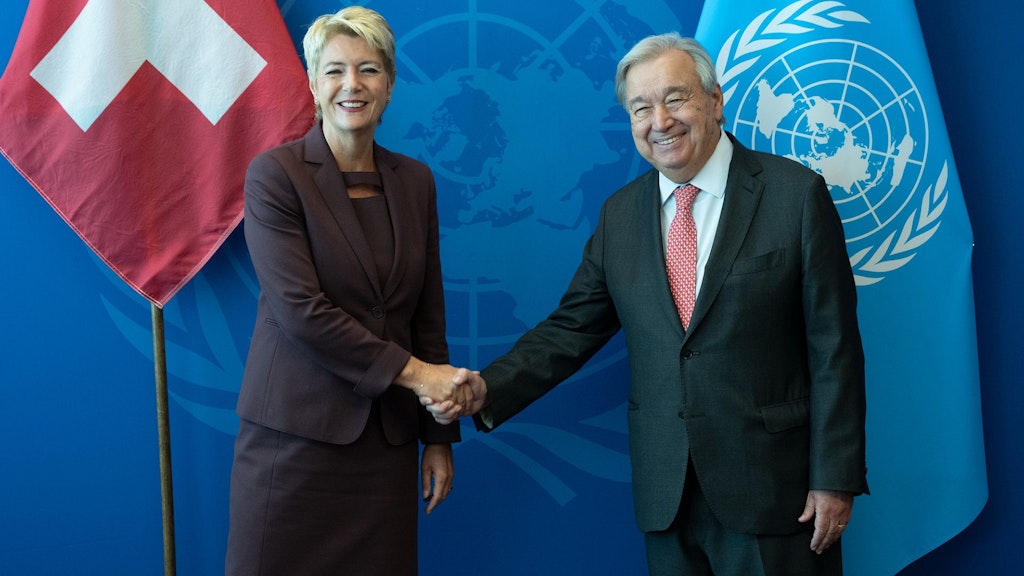
At the opening of the General Debate at the UN in New York on Wednesday, 24 September, President Karin Keller-Sutter cited security and freedom as key values in marking the start of another new era 80 years after the founding of the UN.
Media gallery
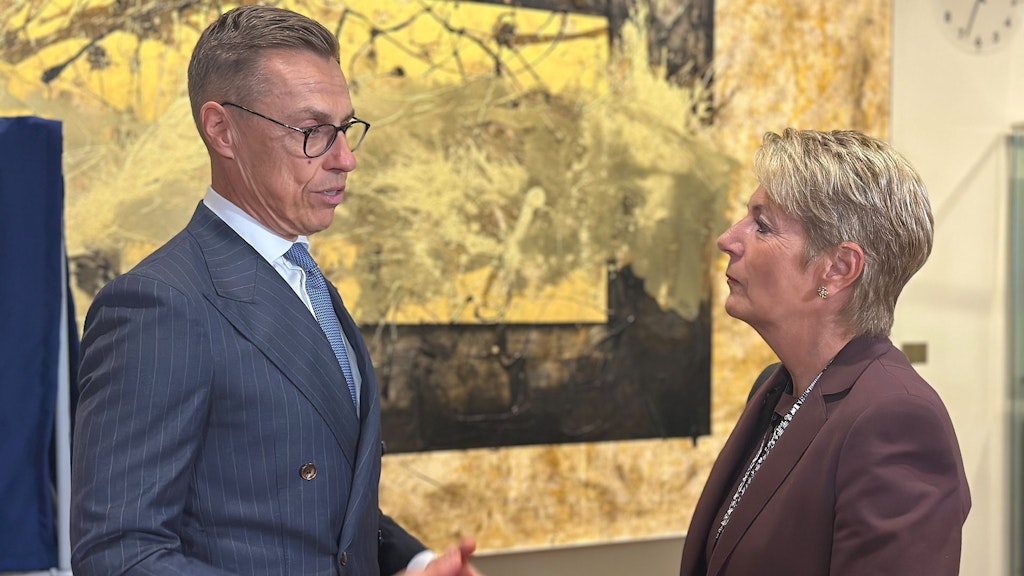
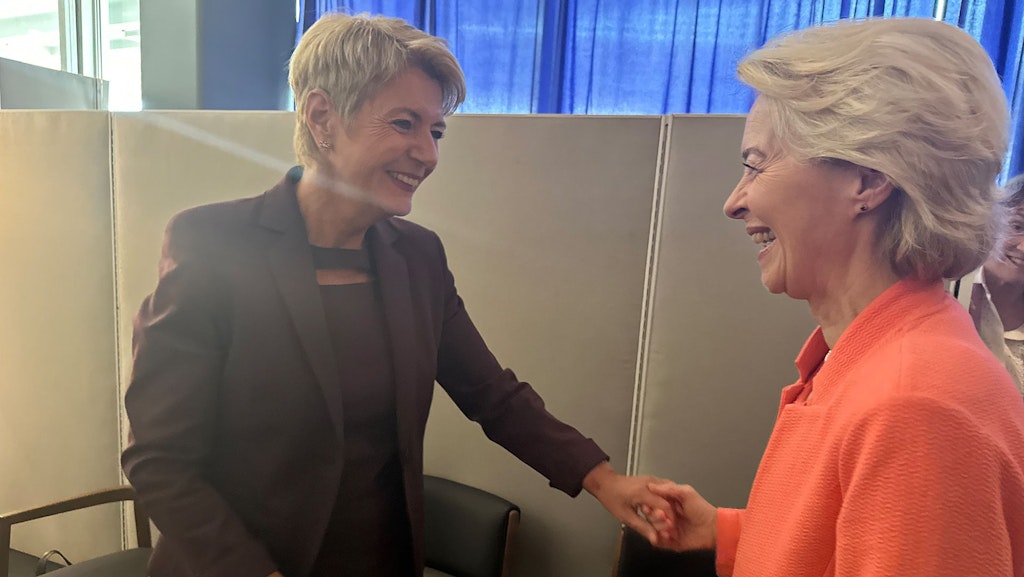
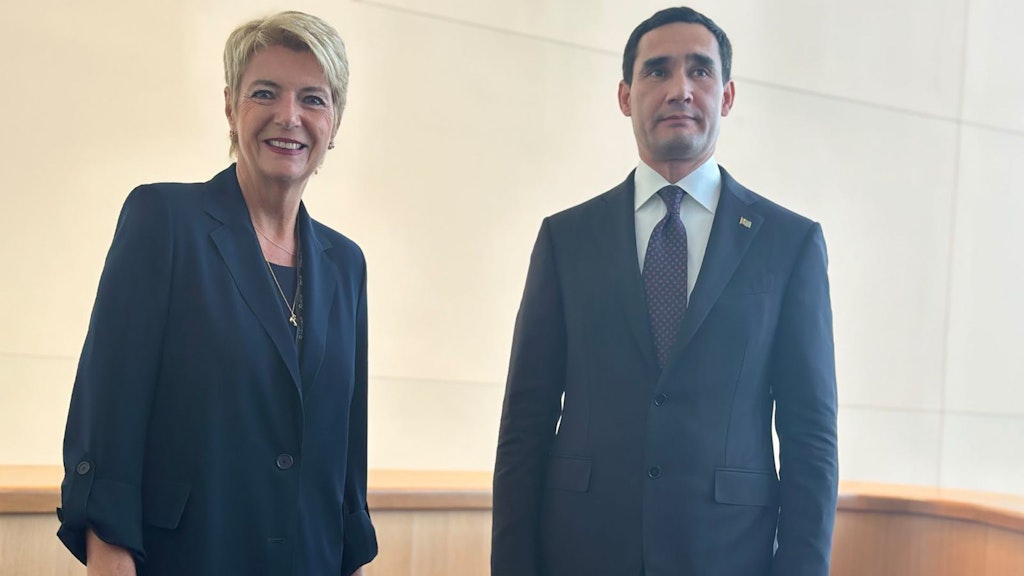
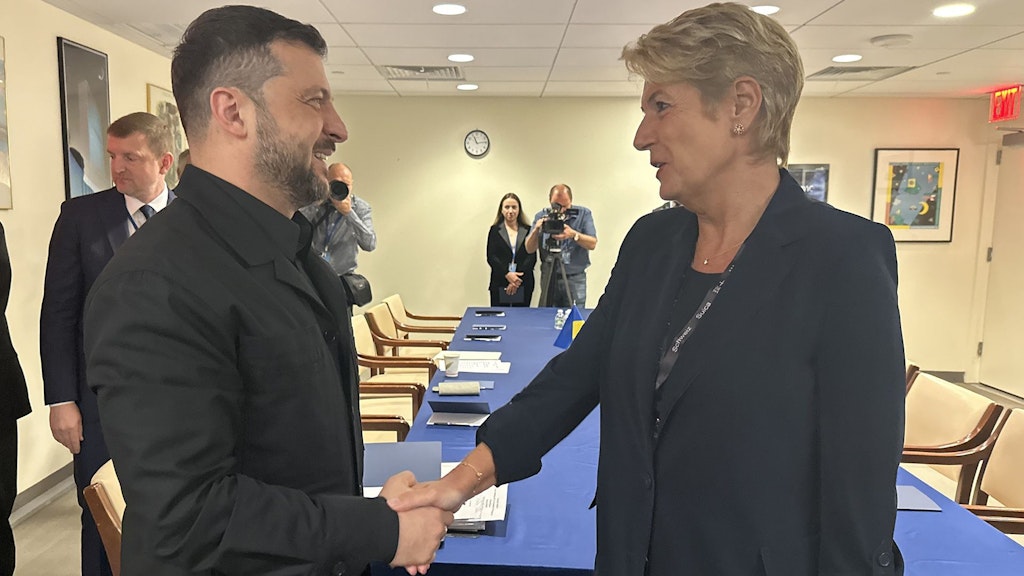
UN General Assembly
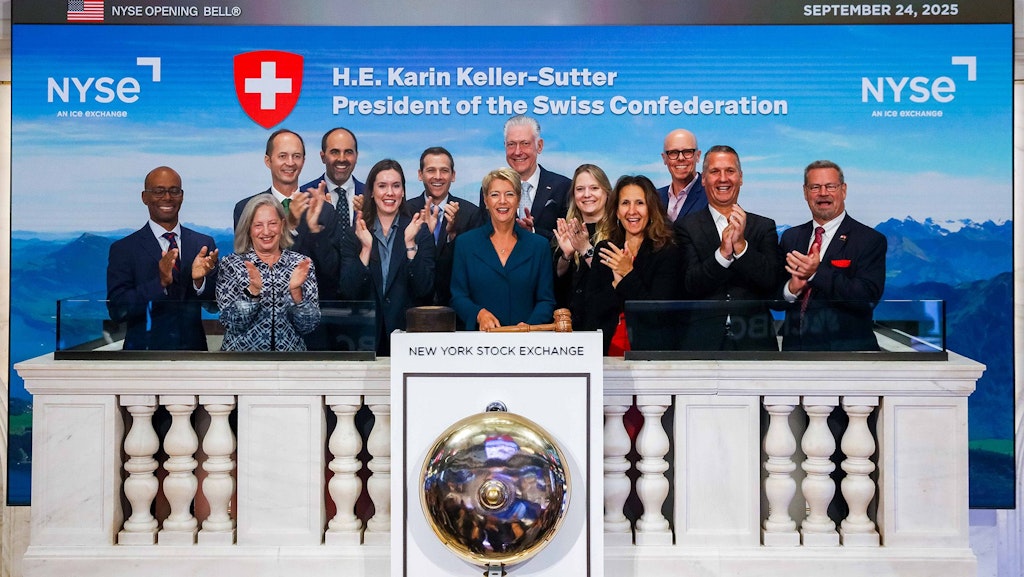
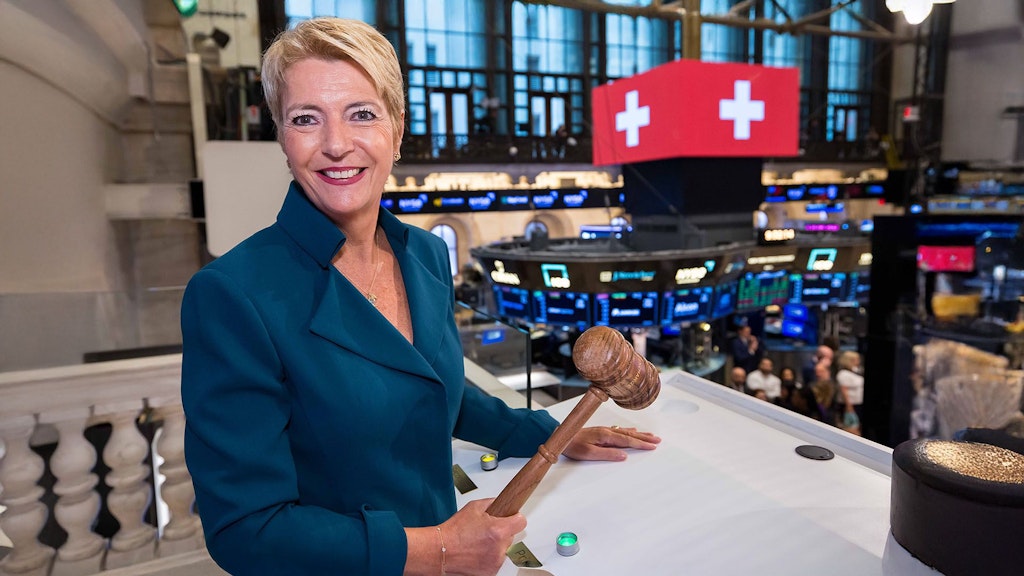
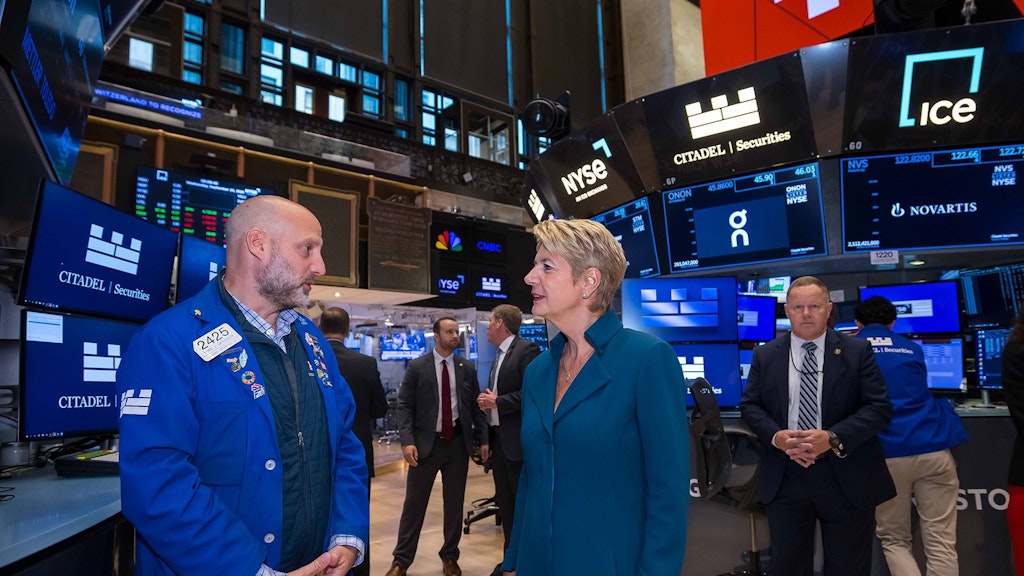
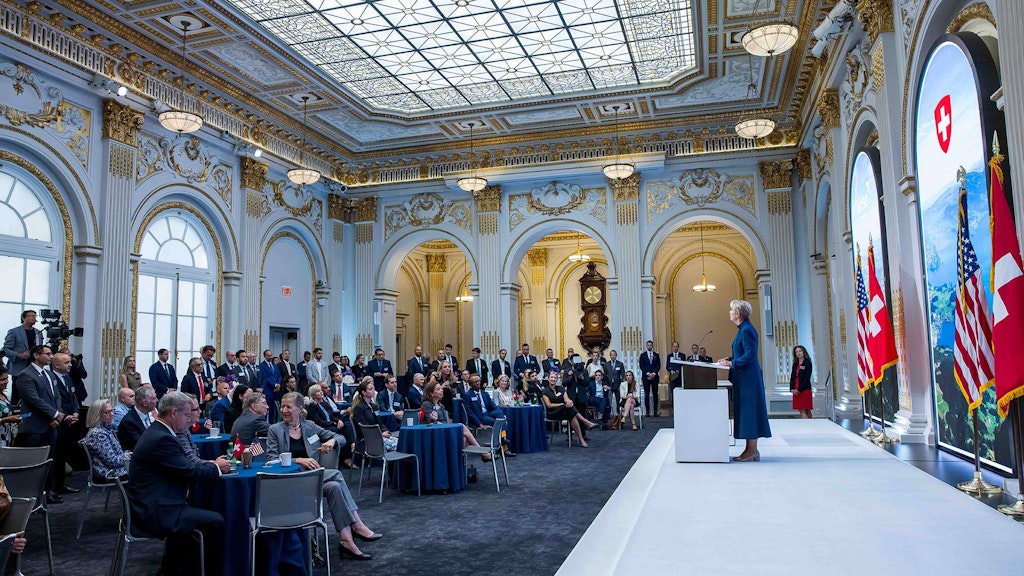
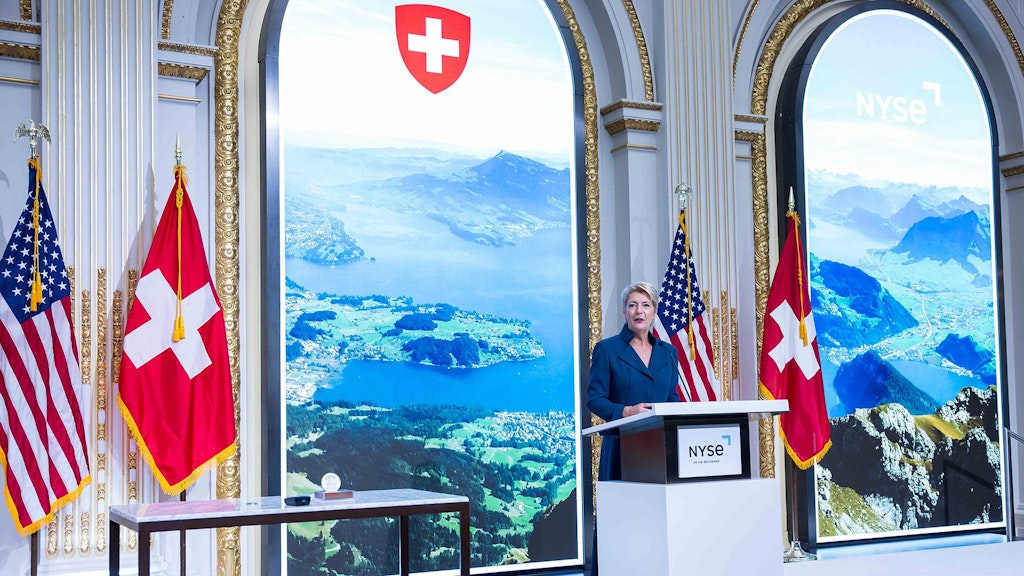
Opening Bell @NYSE
Federal Councillor Karin Keller-Sutter
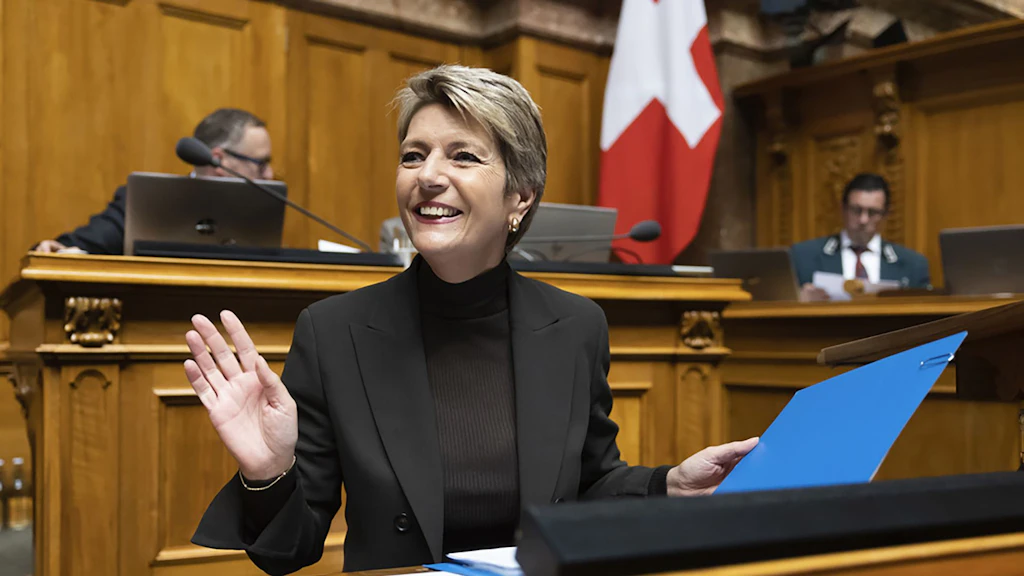
Biography
Federal Councillor Karin Keller-Sutter has been Head of the Federal Department of Finance FDF since January 2023.

Autograph card
Order an autographed card from the Federal Councillor.
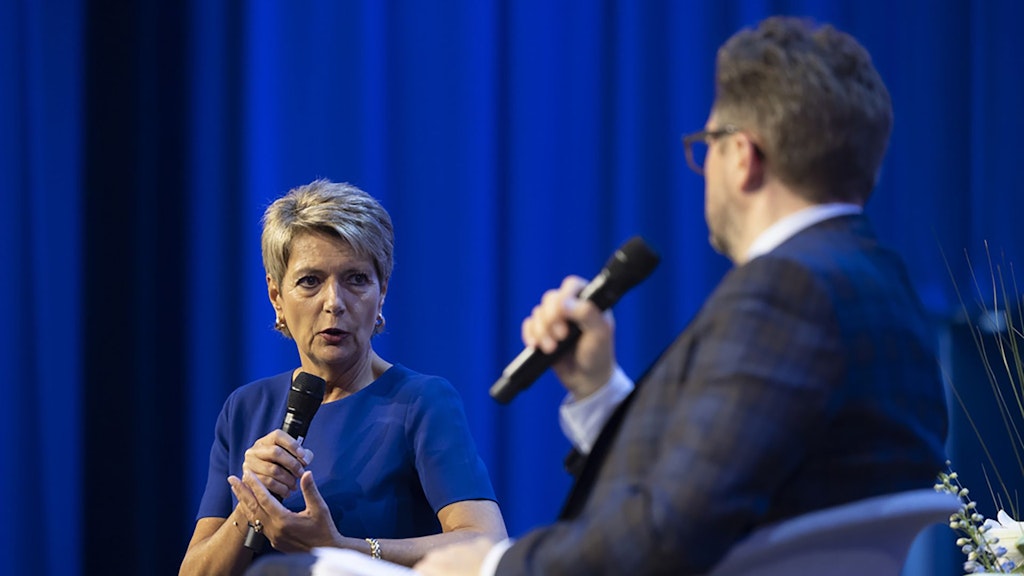
Interviews and articles
A selection of interviews with Federal Councillor Karin Keller-Sutter.
Speeches
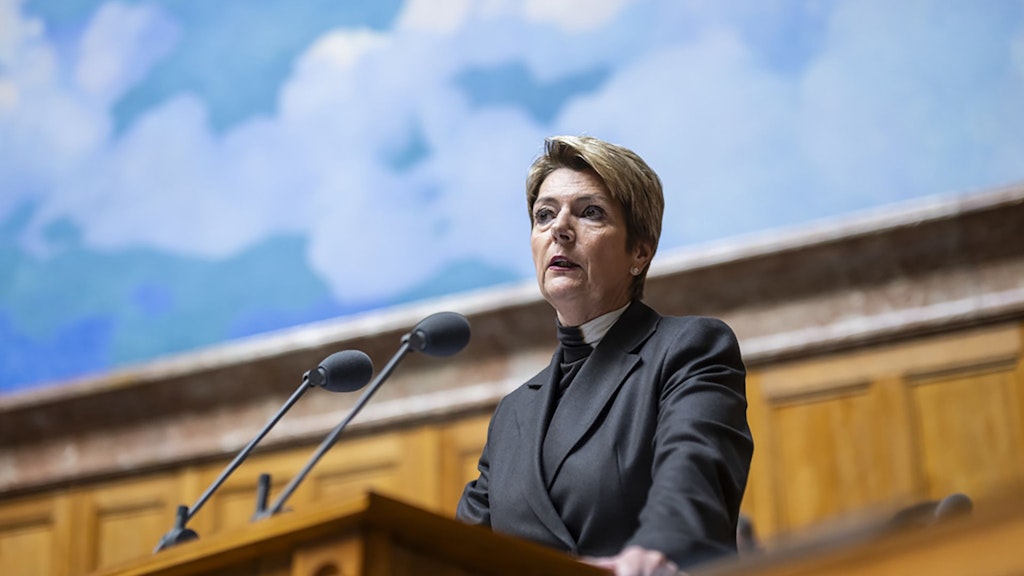
Speeches by Federal Councillor Karin Keller-Sutter in full.
Presidential year 2025
Highlights of Federal Councillor Karin Keller-Sutter's presidential year.