
Europe Day
Message from President Karin Keller-Sutter to mark Europe Day on 5 May 2025
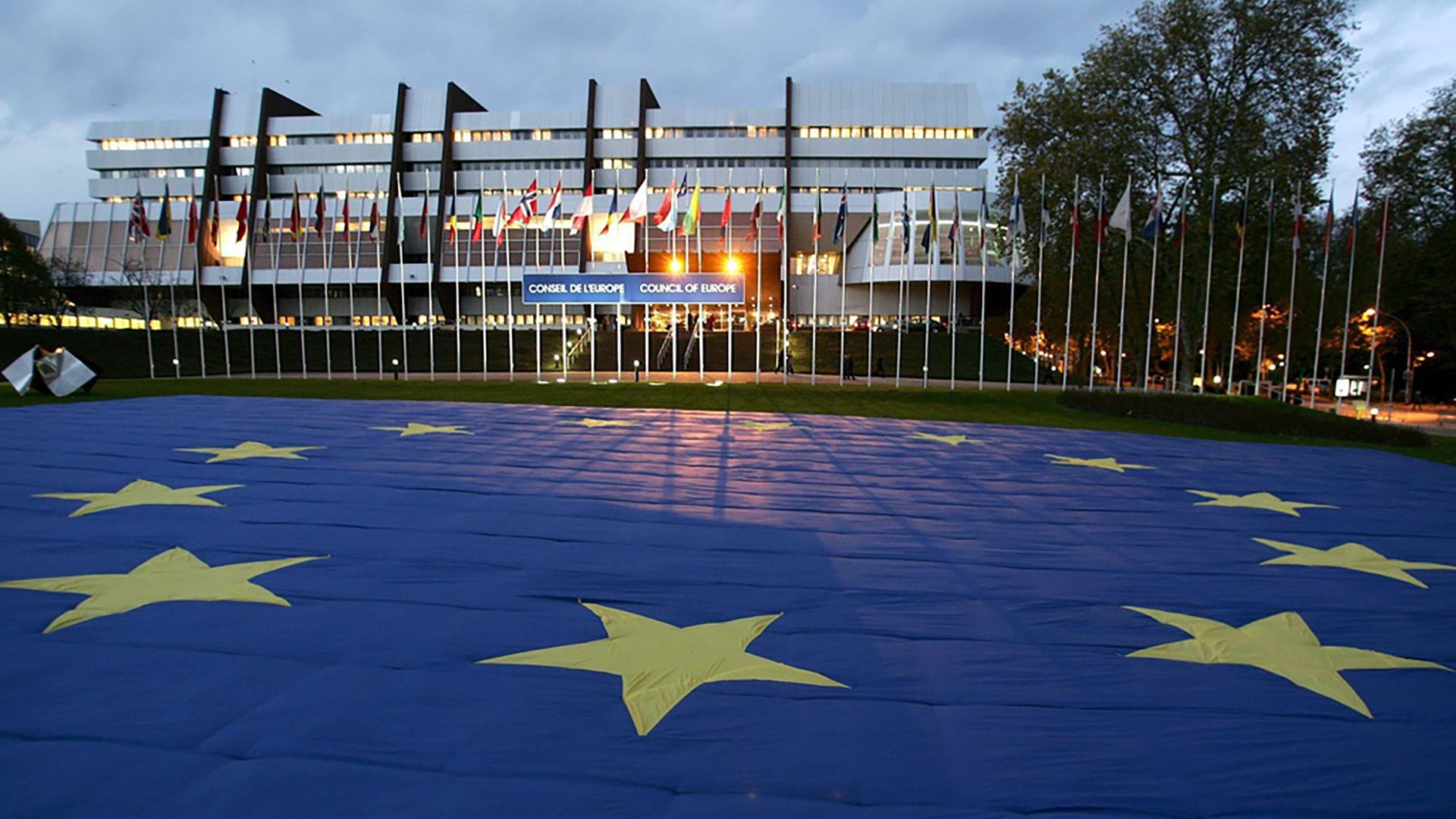
Four years after the end of the Second World War, on 5 May 1949, ten European states met in London and founded the Council of Europe. In doing so, they reaffirmed their “devotion to the spiritual and moral values which are the common heritage of their peoples and the true source of individual freedom, political liberty and the rule of law, principles which form the basis of all genuine democracy...ˮ.
This is the text of the Statute of the Council of Europe. Today the Council has 36 further members, including Switzerland, which joined in 1963.
Seventy-six years on, it is worth remembering where the world stood at the time. Europe was deeply traumatised. The continent was not only in ruins, it was also emotionally scarred. With the brutal murder of millions of people, including the systematic extermination of six million Jews, the Nazis revealed the deepest depths of human depravity. We do not know where Europe would be today if the Allies – the United States, the United Kingdom, France and the Soviet Union – had not won the war.
Given the devastation, it was probably easy at the time to believe in a better future. Better not only in the political sense, as expressed in the Council of Europe's commitment to democracy, the rule of law and human rights. Better in an economic sense as well. The Marshall Plan, launched by the United States a year earlier to rebuild Europe, played a major role in this. It was based not only on financial aid, but also on promoting reforms to liberalise trade and pave the way for a market economy.
As much as democracy is under pressure again today, it remains the best possible form of government. “We must define democracy as that form of government and of society which is inspired above every other with the feeling and consciousness of the dignity of manˮ, said German writer Thomas Mann in his lecture On the Coming Victory of Democracy, which he gave in exile in the United States in 1938.
But democracy only inspires confidence if it can deliver security and prosperity. This is the raison d'être of any state. Maintaining a thriving democratic culture, guaranteeing rights and fundamental freedoms, and strengthening a liberal economic order cannot be delegated to an international organisation.
But at a time when the rules-based international order is once again being called into question and when a Council of Europe member state is the target of Russian military aggression for the fourth consecutive year, the Council of Europe remains vital – as a forum for dialogue and as a link between Europe's diverse cultures.
At the summit in Reykjavík, the heads of state and government of the 46 member states created a new political vision for the Council of Europe, reaffirmed its core tasks and called for renewed efforts to address the current challenges facing European societies.
Looking back on the year in which the Council of Europe was founded, it is clear that democracy is not just a thing of the present: it must remain a firm aspiration also in the future if it is not to become a thing of the past.
Federal Councillor Karin Keller-Sutter
Biography
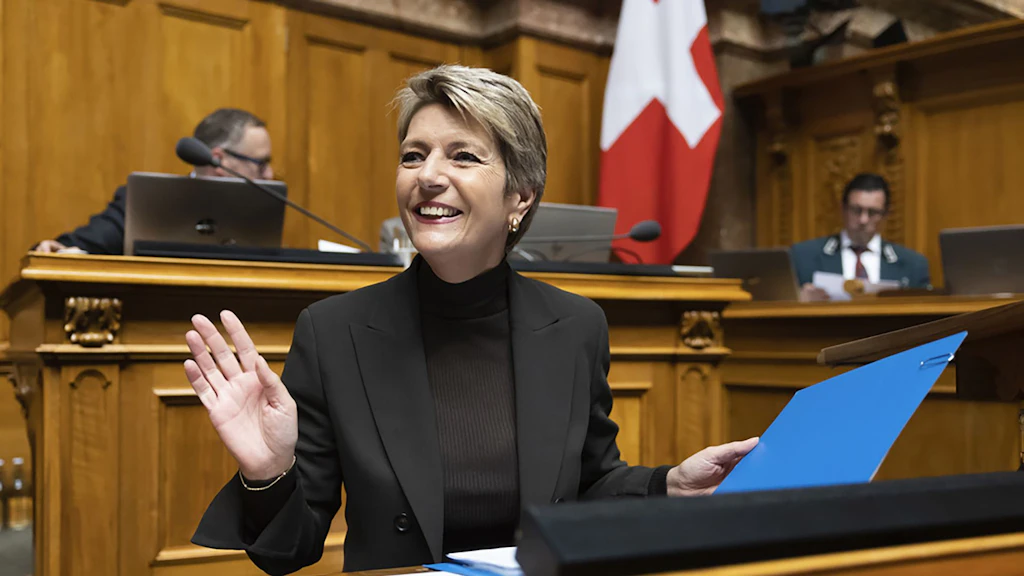
Federal Councillor Karin Keller-Sutter has been Head of the Federal Department of Finance FDF since January 2023.

Autograph card
Order an autographed card from the Federal Councillor.
Interviews and articles
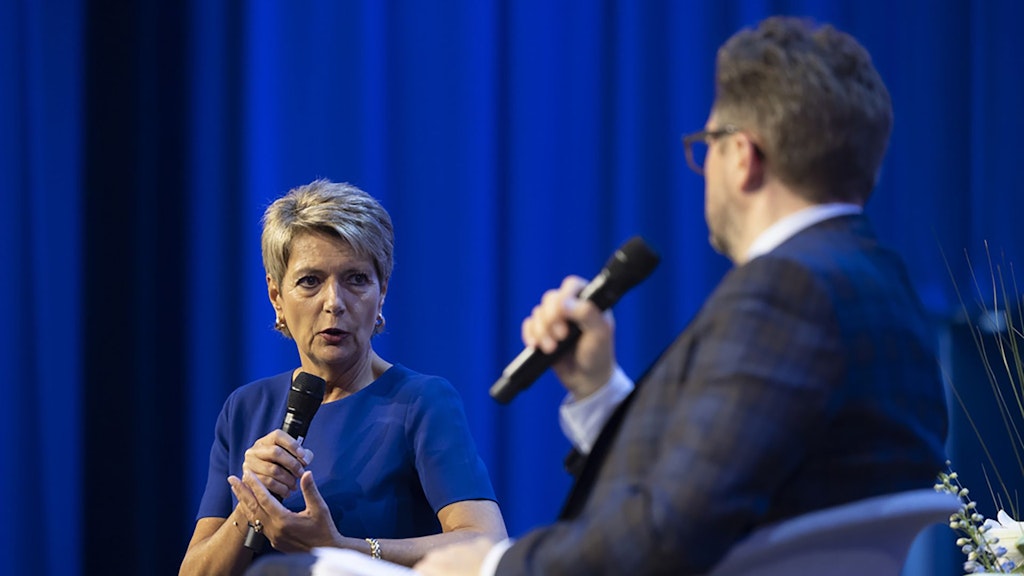
A selection of interviews with Federal Councillor Karin Keller-Sutter.
Speeches
Speeches by Federal Councillor Karin Keller-Sutter in full.
Presidential year 2025
Highlights of Federal Councillor Karin Keller-Sutter's presidential year.